Proudly Serving Central & Eastern Massachusetts





Plumbing, Heating, Cooling & Electrical Experts
Oil-to-Gas Conversion in Worcester County: Is It Worth It With Today’s Fuel Prices?
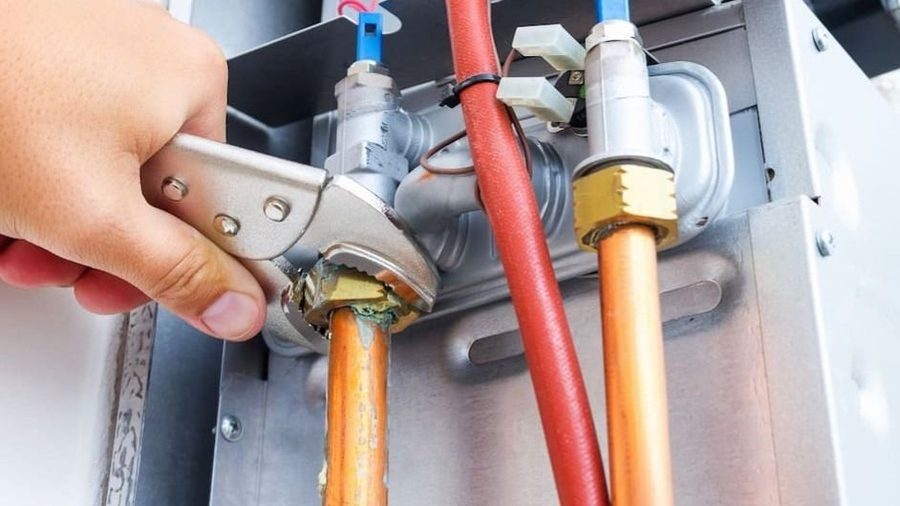
For many Worcester County homeowners, heating oil has been part of winter for decades. But when an older oil furnace or boiler needs repairs, uses more fuel, or is nearing replacement age, it is natural to wonder whether switching to natural gas makes more sense.
Fuel costs are an important part of that decision, but they are not the only factor. The cost of converting the home, natural gas availability, the condition of the existing heating system, equipment efficiency, and long-term plans for the property can all change the calculation.
In this guide, we’ll explain when an oil-to-gas conversion may be worth considering in Worcester County, how to compare heating costs, what a conversion involves, and why homeowners should also consider alternatives before choosing their next heating system.
Is It Worth Converting From Oil to Natural Gas in Massachusetts?
An oil-to-gas conversion can be worthwhile for some Massachusetts homeowners, particularly when an aging oil heating system already needs replacement and natural gas service is readily available at the property.
However, converting solely because natural gas appears less expensive at a particular moment can be a mistake. Energy prices fluctuate, and the upfront cost of converting can significantly affect how long it takes to realize potential savings.
A conversion may be more attractive when:
-
Your oil furnace or boiler is already due for replacement.
-
Natural gas service is available without a costly extension.
-
You want to eliminate oil deliveries and on-site fuel storage.
-
New gas equipment offers a meaningful efficiency improvement over your current system.
-
You expect to remain in the home long enough to benefit from the investment.
-
Other household appliances could potentially use the new gas service.
The best way to answer the question is to compare the total costs and benefits for your specific home.
How Do Oil and Natural Gas Heating Costs Compare Today?
Heating oil and natural gas are sold in different units, which makes comparing their advertised prices misleading. Oil is typically priced by the gallon, while natural gas is billed by the therm.
What homeowners really need to compare is the cost of producing usable heat inside the home.
That depends on several factors:
-
Current fuel prices
-
Efficiency of the existing heating system
-
Efficiency of the proposed replacement
-
Amount of fuel the household typically uses
-
Winter temperatures
-
Home insulation and air leakage
-
Utility delivery and service charges
-
Heating habits and thermostat settings
Fuel prices can also change considerably from one heating season to another. A price advantage today does not guarantee the same difference several years from now.
For Worcester County homeowners, where winter heating represents a significant household expense, reviewing past fuel usage can be especially useful. Your previous oil consumption provides a starting point for estimating how much heat the home actually requires and comparing potential replacement systems.
What Does an Oil-to-Gas Heating Conversion Involve?
Converting from oil to natural gas involves more than removing an oil furnace and installing a gas furnace.
The project begins with determining whether natural gas is available at the property and whether the existing service can support the planned equipment.
Depending on the home, an oil-to-gas conversion may involve:
-
Gas service: Confirming natural gas availability and arranging service when needed.
-
New heating equipment: Installing an appropriately sized gas furnace or boiler.
-
Gas piping: Running the required gas piping to the new equipment.
-
Venting: Evaluating or modifying the venting system based on the new equipment.
-
Oil tank considerations: Properly addressing the existing oil storage tank.
-
Controls: Update thermostats or system controls as needed.
-
Electrical work: Making electrical modifications required by the new system.
-
Permits and inspections: Completing applicable local requirements.
-
System testing: Verifying that the new heating equipment operates safely and correctly.
Homes with boilers may have different conversion considerations than homes with forced-air furnaces. Existing chimneys, distribution systems, and mechanical spaces can also affect the scope of work.
A home-specific evaluation is necessary before determining what the conversion will actually require.
How Much Does It Cost to Convert From Oil to Gas?
No single price accurately represents every oil-to-gas conversion in Worcester County.
One of the biggest variables is whether natural gas already serves the property. A home with existing gas service may have a much different project scope than a property that requires new utility infrastructure.
Other cost factors can include:
-
Type and size of the new furnace or boiler
-
Efficiency level of the replacement equipment
-
Gas piping requirements
-
Venting or chimney modifications
-
Oil tank removal or decommissioning
-
Electrical and control upgrades
-
Changes to existing ductwork or hydronic components
-
Permit and inspection requirements
-
Accessibility of the mechanical equipment
This is why homeowners should compare the total installed cost, not just the price of the new furnace or boiler.
If the existing oil system already needs replacement, it can also help to compare the incremental cost of conversion with the cost of installing another oil system. That provides a more meaningful picture than treating the entire conversion price as an additional expense.
What Are the Benefits of Switching From Oil to Natural Gas?
Potential fuel savings often receive the most attention, but homeowners may consider an oil-to-gas conversion for several other reasons.
Possible benefits include:
-
No regular oil deliveries: Natural gas is supplied through the utility system.
-
No stored heating oil: Converting can eliminate the need for an on-site oil supply.
-
Equipment options: Homeowners can choose from modern gas furnaces and boilers with different features and efficiency levels.
-
Potential efficiency improvement: Replacing older oil equipment with properly selected modern equipment may reduce the amount of energy needed to heat the home.
-
Additional gas appliances: Depending on the property and available service, natural gas may also support other household equipment.
These advantages should still be weighed against conversion costs.
A homeowner spending thousands of dollars to establish gas service may reach a different conclusion than someone whose home already has natural gas for another appliance.
When Does Keeping Oil Heat Make More Sense?
Natural gas is not automatically the best choice just because it is available.
Keeping oil heat may make more sense when the existing equipment is relatively new, reliable, and operating efficiently. Replacing functioning equipment solely to change fuels may not provide enough financial benefit to justify the upfront investment.
Staying with oil may also be worth considering when:
-
Natural gas is unavailable on your street.
-
Bringing gas service to the property would be expensive.
-
Your current oil system has substantial useful life remaining.
-
The home would require extensive modifications for conversion.
-
You expect to move before potential savings offset the conversion cost.
-
You are considering transitioning to electric heat pumps instead.
Homeowners should also remember that replacing an old oil system with newer oil equipment is another option. The decision is not necessarily between keeping an inefficient system forever and converting to gas immediately.
Should You Consider a Heat Pump Instead of Converting From Oil to Gas?
If your oil heating system is approaching replacement, natural gas is not the only alternative worth comparing.
Modern heat pumps provide both heating and cooling, and cold-climate equipment has expanded the situations where heat pumps can be considered in Massachusetts homes.
Depending on the property, a heat pump could:
-
Provide heating and air conditioning from one system.
-
Replace or reduce reliance on fossil-fuel heating.
-
Serve the entire home or individual zones.
-
Work alongside an existing heating system in certain configurations.
-
Offer an option for homes where natural gas is unavailable.
Heat pumps also come with their own installation considerations. You’ll need to evaluate electrical capacity, home heat loss, existing ductwork, equipment sizing, and cold-weather performance.
For homeowners already preparing to make a significant investment in their heating system, comparing oil, gas, and heat-pump options can clarify long-term choices.
What Should Worcester County Homeowners Compare Before Converting?
Before deciding on an oil-to-gas conversion, look beyond this winter’s fuel prices and consider how the decision fits your home over the next several years.
Ask these questions:
-
How old is my current oil furnace or boiler?
-
How much oil does my household typically use each year?
-
Is natural gas already available at my property?
-
What will the complete conversion cost?
-
Will the project require chimney or venting changes?
-
What needs to happen to the existing oil tank?
-
How efficient is my current system?
-
How efficient would the proposed replacement be?
-
Does my home need insulation or air-sealing improvements?
-
How long do I expect to remain in this house?
-
Would a heat pump be a practical alternative?
-
Am I comparing total ownership costs rather than fuel prices alone?
This type of comparison is more useful than trying to predict which fuel will always be cheapest.
A Worcester County home with an aging oil boiler and convenient access to gas may have a compelling reason to convert. Another home with newer oil equipment and no nearby gas service could have a completely different answer.
How Can You Get More Value From Any New Heating System?
Changing fuels will not solve every source of high heating costs. The condition of the home also affects how much energy it takes to maintain comfortable temperatures.
Before or alongside heating system replacement, consider:
-
Improving appropriate insulation
-
Sealing significant air leaks
-
Addressing damaged or poorly performing ductwork
-
Scheduling routine heating maintenance
-
Using thermostat schedules appropriately
-
Having new equipment professionally sized
Oversized equipment is not automatically better. Proper sizing helps a heating system operate as intended and should be based on the home’s actual heating requirements rather than simply matching the capacity of old equipment.
Improving the building envelope can sometimes affect those requirements, which is another reason to look at the house as a complete system.
Is an Oil-to-Gas Conversion Right for Your Worcester County Home?
With changing fuel prices and several heating technologies available, there is no universal answer to whether Worcester County homeowners should convert from oil to natural gas.
If your oil furnace or boiler is nearing replacement and natural gas is readily available, conversion may be worth exploring. If the existing equipment still has years of useful life, gas service would be costly to establish, or a heat pump better fits your long-term goals, another option may make more sense.
Landry Mechanical can evaluate your existing heating system, discuss the requirements of an oil-to-gas conversion, and help you compare heating options for your home. If you’re considering replacing oil heat in Worcester County, contact us today to schedule service and find a solution that fits your home, comfort needs, and budget.
Book Online in Minutes
schedule service today
When you need AC, heating, plumbing, or electrical repairs and replacements, call Landry Mechanical Inc Plumbing HVAC & Electric or book online for appointments in Millbury, MA, and throughout Worcester, Middlesex, and Norfolk Counties.